
An Interlude: The Soldiers Behind the Sound
Eight Artists. One Unbroken Thread. Everything the Industry Never Wanted You to Trace.

June is Black Music Month.
Last year, I wrote a piece on why we did not learn about some of the most iconic Black Musicians in school. Within the article, I said, “Black music is evidence.” I meant that seriously. Evidence of labor, evidence of genius, the evidence of theft, survival, and transformation. However, the evidence does not prosecute itself. Someone has to name the names, trace the thread, and refuse to let the record stay incomplete. That is what this piece is for.
We talked about Henry Ford and his campaign to engineer Black artistry out of American public life. We talked about the structures: The curriculum, the industry, the legislation, and the criminalization. However, the structures do not defeat themselves. They get defeated by people, specific people, with specific names, who showed up and played and sang and wrote and refused.
So this is for them. Not a survey, and this is not a greatest hits countdown. This lesson is a reckoning with what these eight artists actually did, what was done to them in return, and what we lose when we consume the music without knowing the people who made it possible.
This is Black Music Month. We do not get to celebrate without doing the work.
Sister Rosetta Tharpe: The Foundation They Built On and Forgot to Name
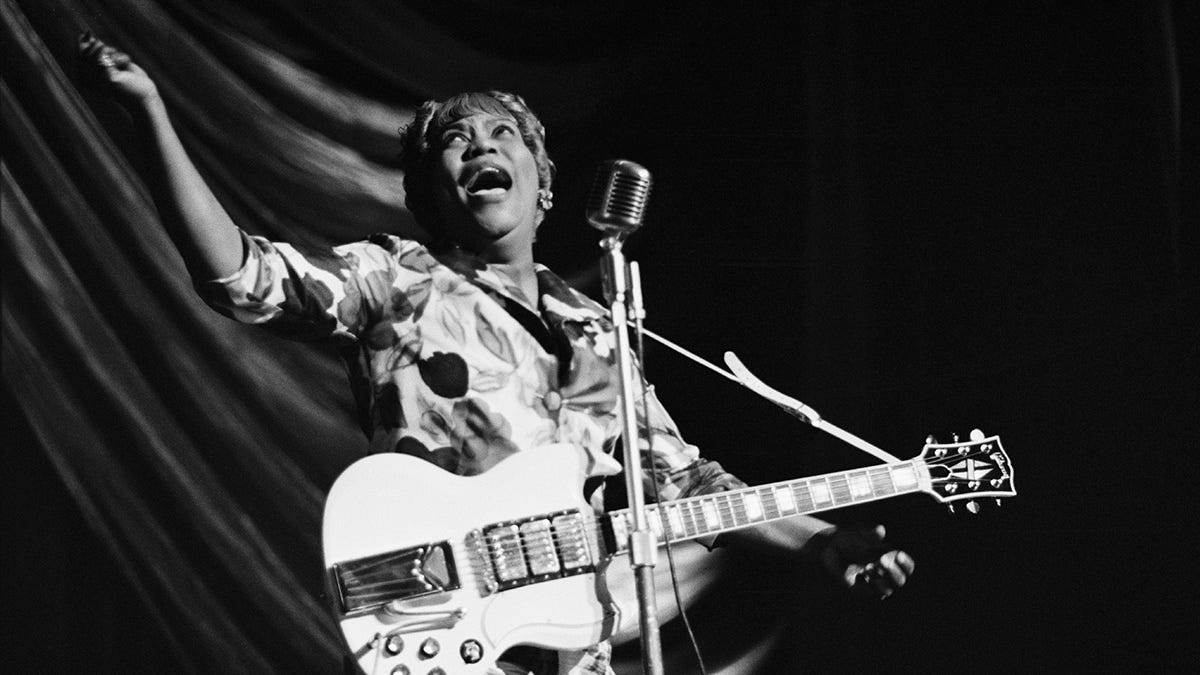
Before Elvis, Chuck Berry, and before anyone put the words rock and roll on a marquee and sold it to a white teenager in 1955, Sister Rosetta Tharpe was standing in front of a congregation in Cotton Plant, Arkansas, playing an electric guitar with a distortion and a drive that nobody had heard before. She was born in 1915. She was doing this in the 1940s. Not as a curiosity, but it was her craft.
Rosetta Tharpe did not stumble into innovation. She was trained. Her mother, Katie Bell Nubin, was a mandolin player and evangelist in the Church of God in Christ, and Rosetta grew up inside the tradition before she knew enough to push against it. She could play slide guitar at six years old. She was performing at ten. By the time she recorded her first sides for Decca Records in 1938, including a version of “Rock Me” that placed her electric guitar front and center against a full orchestra, she had already mastered the thing most musicians spend a lifetime chasing: she made the spiritual feel physical.
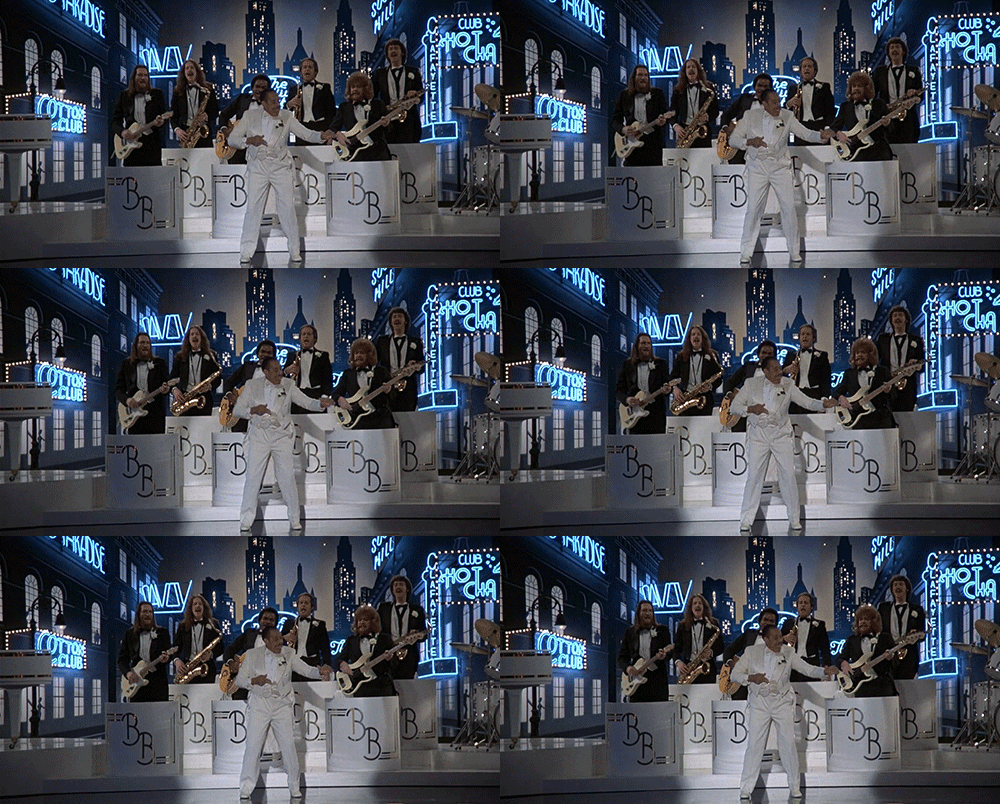
What made Tharpe dangerous, in the best possible way, was that she refused the boundary between sacred and secular. She played gospel in nightclubs; she headlined at the Cotton Club. She recorded with Lucky Millinder and Cab Calloway’s orchestras. The Church disapproved. Her community pushed back. She kept going. In 1944, she performed a concert at Griffith Stadium in Washington, D.C. that drew 14,000+ people and was documented as one of the first rock concerts in American history, years before the genre had a name.
Little Richard called her the original soul sister. Johnny Cash cited her as a primary influence. Elvis watched her and learned her moves. Keith Richards has said on record that she is the reason he picked up a guitar. And yet, for decades, her name was absent from the textbooks, absent from the Rock and Roll Hall of Fame, absent from the conversation entirely. She was inducted into the Hall of Fame in 2018, forty-five years after she died in 1973, having spent her final years in financial hardship after a stroke left her unable to perform.
That is not an accident. That is a pattern. Learn the name before you continue reading.
Cab Calloway: The Disruptor They Let In the Side Door
Cabell “Cab” Calloway III grew up in Rochester, New York, and Baltimore, Maryland, the son of a lawyer and a church organist. He was not supposed to become a bandleader. He was enrolled at Crane College in Chicago, studying law, when the music pulled him out of the classroom for good. By 1929, he was fronting his own group. By 1931, he had taken over the residency at the Cotton Club in Harlem, replacing Duke Ellington, which was not a small thing to do.
The Cotton Club is worth understanding clearly because it represents exactly the contradiction Black artists navigated during that era. The club sat in the heart of Harlem. The performers were almost exclusively Black. The audience was almost exclusively white. Black Harlem residents were, with very few exceptions, not permitted inside. Cab Calloway performed for packed houses of white New Yorkers who wanted the music and the spectacle but not the community that created it. He knew this. He played anyway. He made them come to him.
His “Minnie the Moocher,” recorded in 1931, became the first record by a Black artist to sell a million copies. The song’s call and response structure, its hi-de-ho scat sequences, and its theatrical energy were not gimmicks. They were a direct line back to African oral tradition, to field hollers, to the church, dressed up in a tuxedo, and played on national radio. He was smuggling culture into living rooms that would never have invited it through the front door.
Calloway also ran one of the tightest, most disciplined orchestras of the swing era. He had standards. He fined musicians for being late, for drinking on the job, and for playing below their ability. He understood that excellence was not just artistic protection; it was political protection. A Black bandleader who demanded and delivered excellence could not be easily dismissed. He held that standard for decades, continuing to perform well into the 1980s, appearing in The Blues Brothers in 1980 as himself, and remaining a living bridge between the Harlem Renaissance and the late 20th century.
Billie Holiday: The Voice They Tried to Silence With a Badge
Eleanora Fagan was born in Philadelphia in 1915 and raised largely in Baltimore. Her childhood was not survivable by most people’s standards. Poverty. Abuse. A mother who worked as a domestic and was largely absent. A father, Clarence Holiday, who played guitar in Fletcher Henderson’s Orchestra, was mostly not there. She was sent to a reform school at 9. She was assaulted at 10. She was working in a brothel as a teenager. By the time she walked into a Harlem club at 18 and sang for her supper because she had no other options, she had already lived more than most people accumulate in a lifetime.
What she did with all of that is what made her Billie Holiday. She did not experience pain. She transformed it. Her phrasing was singular: She sang behind the beat with a deliberateness that felt like she was choosing every single word as she arrived at it. She bent notes the way a preacher bends a sermon, holding on just long enough to make you feel it before she released. She turned a pop song into an interior monologue. She turned an interior monologue into shared testimony.
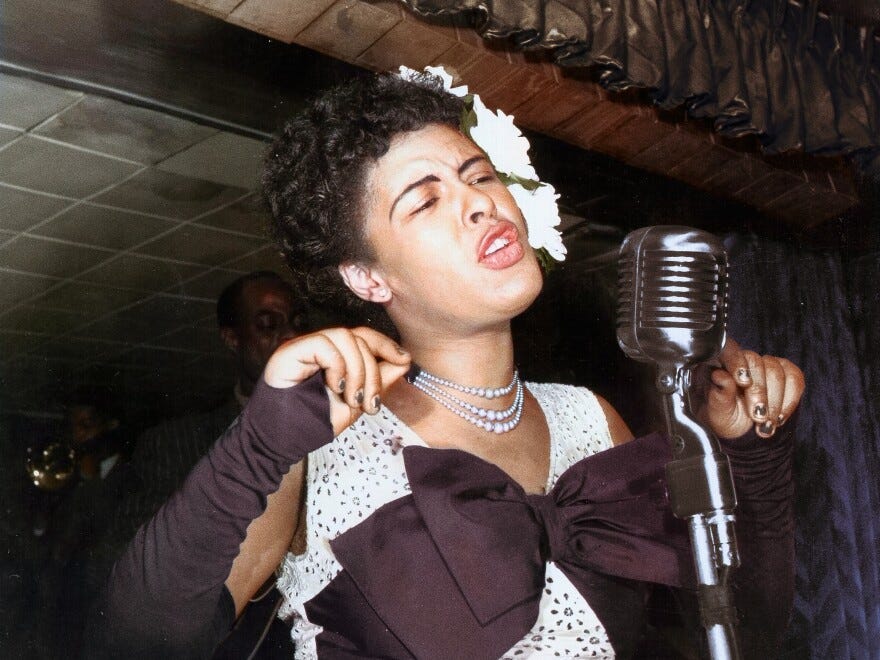
In 1939, she recorded “Strange Fruit,” a poem written by Abel Meeropol, a Jewish schoolteacher from the Bronx, set to a haunting melody. The song described the bodies of lynched Black men hanging from Southern trees with unflinching clarity. Columbia Records refused to record it. She recorded it for a small independent label, Commodore Records, and performed it as the final song of her sets at Cafe Society, the first integrated nightclub in New York City. The house lights would go dark. The waitstaff would stop moving. No encores after. Just the song, and then silence.
Harry Anslinger, the head of the Federal Bureau of Narcotics, heard that song and decided Billie Holiday needed to be destroyed. Anslinger was a committed racist who built his career on criminalizing drug use in Black and brown communities while ignoring it in white ones. He targeted Holiday specifically and directly. He sent an agent named Jimmy Fletcher to befriend her and gather evidence. He arrested her in 1947 and had her federally prosecuted for drug possession. She served a year in prison. Upon release, New York City revoked her cabaret license, which meant she could not perform in any venue that served alcohol, which was nearly every venue she needed.
She kept singing. She recorded “Lady in Satin” in 1958, one year before she died, her voice worn down by everything that had been done to her body, and it remains one of the most emotionally devastating recordings in American music history. She died in 1959 at forty-four years old, under federal arrest in a hospital bed, with seventy cents in her bank account and several hundred dollars strapped to her leg in cash.
The government did not accidentally target Billie Holiday. They targeted her because a Black woman singing about lynching to integrated audiences was a political threat. Remember that the next time someone tells you music is just entertainment.
Nat King Cole: The Man Who Was Too Good to Be Forgiven For It
Nathaniel Adams Coles was born in Montgomery, Alabama, in 1919 and raised on the South Side of Chicago. His father was a Baptist minister. His mother was a choir director. He was playing organ in church at four years old. By 15, he was playing with his older brother Eddie’s band. By 17, he had dropped out of school and was touring professionally. He was in Los Angeles by nineteen and formed the Nat King Cole Trio in 1937, a piano-led jazz group that became one of the most technically sophisticated small ensembles of the era.
Nat King Cole was, by any honest measure, one of the finest jazz pianists who ever lived. Oscar Peterson, one of the other finest jazz pianists who ever lived, called him the primary influence on his playing. The trio’s work in the early 1940s, its interplay between piano, guitar, and bass without a drummer, its harmonic sophistication and rhythmic lightness, was genuinely innovative. He was also a singer of almost impossible elegance. His voice was warm, precise, and intimate without being soft. When he sang a lyric, you believed he meant exactly those words.
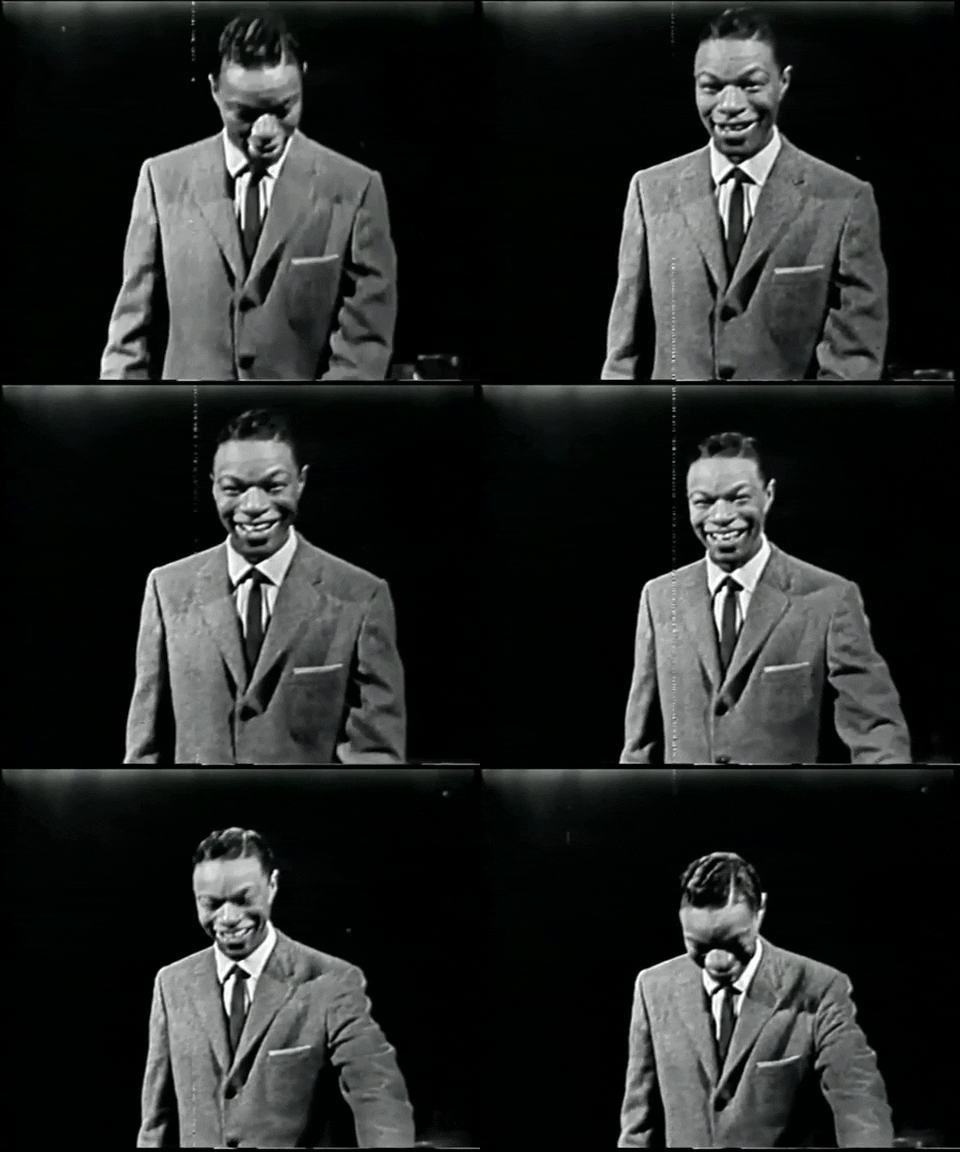
In 1956, NBC gave Nat King Cole his own television variety show, “The Nat King Cole Show,” making him the first Black American to host a nationally broadcast primetime television program. The show was critically praised. It attracted major guest stars including Tony Bennett, Ella Fitzgerald, Peggy Lee, and Harry Belafonte. The audience response was strong. And yet, after one full season, no national sponsor would buy advertising time. Not because the ratings failed. Because the sponsors did not want to associate their products with a Black host in the American South, where many of their customers lived.
Cole kept the show running for sixty-four episodes on NBC’s goodwill and without a sponsor, paying his performers partially out of his own pocket. He canceled it himself in December 1957. His statement at the time was quiet and direct: “Madison Avenue is afraid of the dark.”
That sentence carries more than wit. It carries the full weight of what it meant to be Nat King Cole in America: to be undeniably excellent, to be given the stage, and to have the infrastructure refuse to hold you up once you were standing on it. He continued recording. He died of lung cancer in 1965 at forty-five years old. Quincy Jones, who arranged for him and knew his full musical range, said Cole was the most underrated piano player in jazz history. That is not a small thing to say. It is an indictment of what we chose to amplify versus what we chose to look past.
Nina Simone: The Artist Who Refused Every Box They Built
Eunice Kathleen Waymon was born in Tryon, North Carolina, in 1933, the sixth of eight children of a Methodist minister and a domestic worker. She was a musical prodigy. A white woman in her town, moved by her obvious gifts, formed a committee to fund her classical piano education. She studied with Carl Friedberg, a student of Clara Schumann, at the Juilliard School. In 1951, she applied to the Curtis Institute of Music in Philadelphia, one of the most prestigious conservatories in the country. She was rejected. She always believed it was because she was Black.
That rejection redirected the course of American music. Unable to pursue the classical career she had trained for and intended, Eunice Waymon took a job playing piano at a bar in Atlantic City in 1954, gave herself the stage name Nina Simone to hide her identity from her religious family, and discovered that she had to sing to keep the gig. What came out of that accident was something that had no name and needed none: a voice and a musical intelligence that moved between classical, jazz, gospel, folk, blues, and soul with complete authority over all of them.
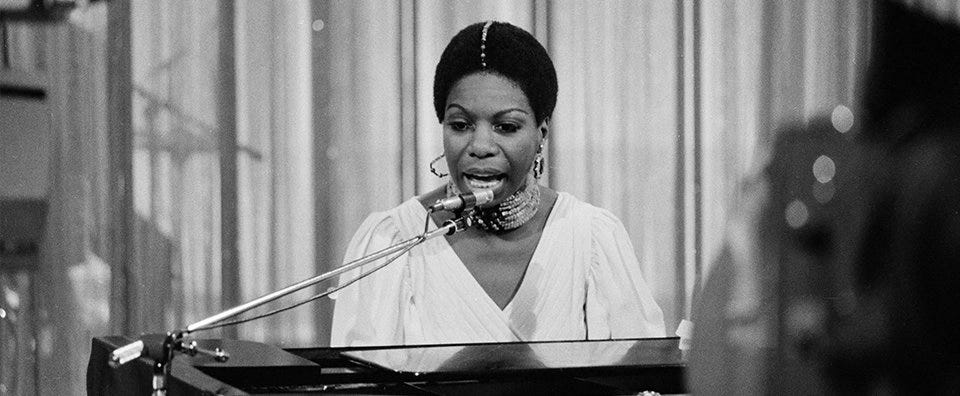
Nina Simone did not ease into political music. She was pushed into it by a specific act of violence. On September 15, 1963, four members of the Ku Klux Klan bombed the 16th Street Baptist Church in Birmingham, Alabama, killing four young girls: Addie Mae Collins, Cynthia Wesley, Carole Robertson, and Carol Denise McNair. The same week, civil rights leader Medgar Evers was murdered in his driveway in Mississippi. Simone sat down at her piano and in less than an hour wrote “Mississippi Goddam,” a full-throated song of rage and grief that named names, called out the government, and refused every comfort. She performed it at Carnegie Hall in 1964 to a stunned audience.
Radio stations in the South returned the promotional copies of the single to her record label, broken in half. She took that as confirmation that she had said something true.
Her commitment to the movement cost her commercially. She alienated mainstream audiences, lost radio play, and was blacklisted from certain venues. In 1970, exhausted and disillusioned after the assassinations of Martin Luther King Jr. and Robert Kennedy, she left the United States. She lived in Liberia, Barbados, Switzerland, the Netherlands, and France, largely in exile from the country she had spent her art defending. She returned occasionally for concerts but never came back to stay. She died in France in 2003.
What Nina Simone teaches is this: the cost of artistic integrity in a racist system is not abstract. It is specific, financial, geographic, and cumulative. She paid it anyway. Every time.
Sam Cooke: The Man Who Understood the Business Before the Business Was Ready for Him
Samuel Cooke was born in Clarksdale, Mississippi, in 1931 and raised in Chicago. His father was a Baptist minister. Gospel was the first language in his house. He joined the Soul Stirrers, one of the most celebrated gospel quartets in the country, at nineteen years old, replacing R.H. Harris, who was one of the most influential gospel singers alive. He was not intimidated. He was ready. His tenor was so clean, so perfectly placed, so capable of moving between smoothness and piercing emotion that audiences would scream when he opened his mouth.
In 1957, he crossed over to secular music and recorded “You Send Me,” which went to number one on both the pop and R&B charts. The gospel community considered it a betrayal. He kept going. What separated Sam Cooke from nearly every other Black artist of his era was not just his voice. It was his understanding of the business architecture that surrounded the voice. He studied his contracts. He started his own publishing company, KAGS Music, in 1958, which meant he owned the rights to his own songs, a radical act for a Black artist at that moment. He started his own record label, SAR Records, in 1961. He signed other artists. He was building an infrastructure.
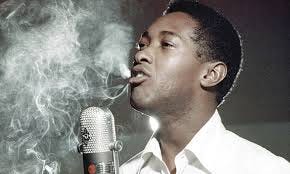
He was also becoming politically conscious in ways that unsettled the people around him. He watched Bob Dylan perform “Blowin’ in the Wind” and felt ashamed that a white folk singer had written the defining protest song of the civil rights era before he had. He went home and wrote “A Change Is Gonna Come” in one sitting. The song was recorded in 1963 and released as a single in December 1964, three weeks after his death. It became an anthem. He never heard it embraced.
Sam Cooke was shot and killed on December 11, 1964, at a motel in Los Angeles. He was thirty-three years old. The circumstances of his death have never been fully resolved to the satisfaction of his family or many of those who have studied the case. What is not disputed: he was in the middle of building something that would have fundamentally shifted the power dynamics of the music industry for Black artists. He was a businessman with a voice, and the combination was dangerous.
Quincy Jones, who knew him well, has said that Sam Cooke was the smartest man he ever met in the music business. That accounting matters. Because Cooke was not just an artist. He was a blueprint. And his death foreclosed something we are still trying to rebuild.
James Brown: The Hardest Working Man Nobody Properly Paid
James Joseph Brown Jr. was born in Barnwell, South Carolina, in 1933 and raised in Augusta, Georgia, in extreme poverty. He picked cotton, shined shoes, and danced for soldiers at Fort Gordon for coins. He was arrested at 16 for breaking into cars and served three years in a juvenile detention facility. By the time he got out, he had decided that music was his way out of every system that had been built to contain him.
James Brown did not discover funk. He invented it. The shift that happened in his music between his early gospel-influenced recordings and what he was doing by 1965 with “Papa’s Got a Brand New Bag” was not incremental. It was architectural. He moved the emphasis off the melody and onto the one, the first beat of every measure, driving everything else into rhythmic service of the groove. His band became a machine. He ran it with military discipline, fining musicians for missed notes, for wrong shoes, for anything that broke the standard.
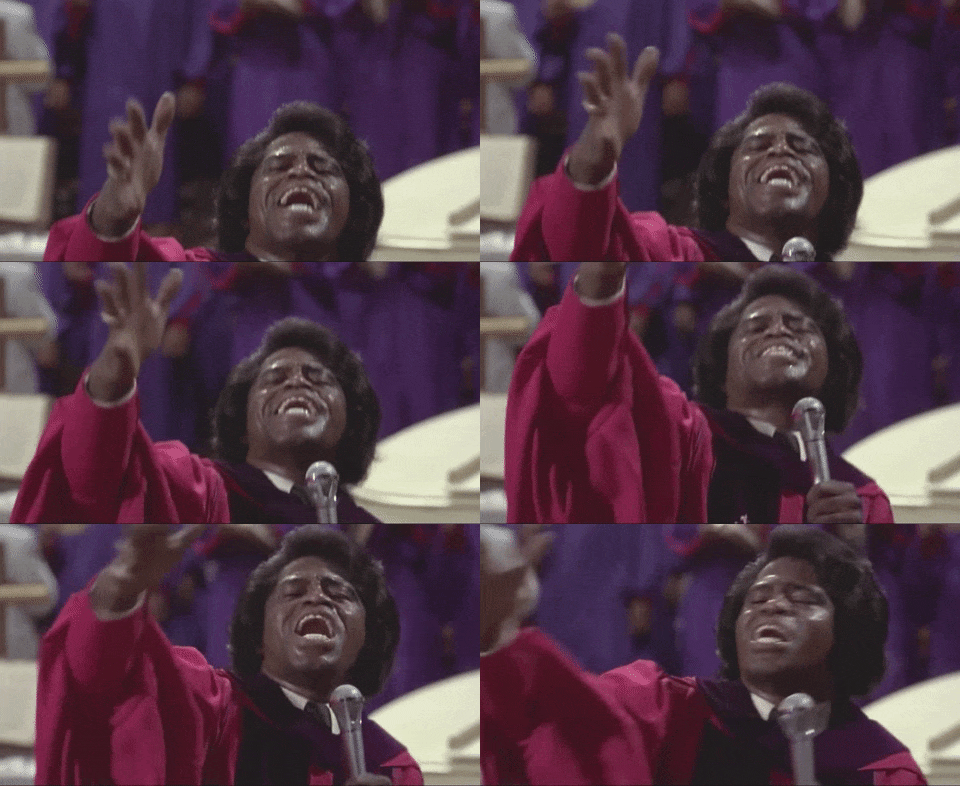
He was also a political figure, whether the mainstream wanted to see him that way or not. After the assassination of Martin Luther King Jr. in April 1968, James Brown performed a concert in Boston that was broadcast live on television. The mayor of Boston had considered canceling it, fearing riots. Brown insisted it was. He stood onstage and told the audience to go home, to be dignified, to honor King with their behavior. Boston largely stayed calm while other cities burned. The federal government acknowledged his role. He received a personal call from Vice President Hubert Humphrey.
And yet. The business treated him the way the business treated Black artists. His recordings were sampled by hip-hop producers beginning in the early 1980s, making his beats the literal foundation of a new genre, generating billions of dollars in commercial music. He received a fraction of what he was owed. His estate entered legal disputes that lasted for years after he died in 2006. He died with significant financial complications despite being one of the most commercially significant artists in American music history.
Hip-hop is built on James Brown’s back. Literally. If you have ever nodded your head to a sample-based rap record, you have felt his work. Find out what he was paid for it.
Michael Jackson: The Archive That Was Almost Taken From Him
Michael Joseph Jackson was born in Gary, Indiana, in 1958. By the time he was eleven years old, he had already internalized everything that came before him. You can hear it in the early Jackson 5 recordings: the gospel training, the James Brown footwork, the Motown production architecture, the soulfulness of Sam Cooke in the phrasing. He was not imitating those traditions. He had absorbed them so completely that they became the raw material for something new.
Thriller, released in November 1982, became the best-selling album in recorded history. Seven of its nine tracks were released as singles. It won eight Grammy Awards in a single night. Its music videos, particularly “Billie Jean” and “Thriller” itself, redefined what a music video could be and forced MTV, which had largely refused to play Black artists, to air his work after CBS Records threatened to pull all of its artists from the channel. Quincy Jones produced the album. The collaboration between Jones and Jackson represented the full accumulation of the lineage traced in this piece, a Black man who had been arranging music since the Calloway era bringing his complete knowledge to bear on a young Black artist who had grown up inside every tradition Jones had helped shape.
What most people do not know is what Michael Jackson did with his commercial power once he had it. In 1985, he purchased the ATV Music Publishing catalog for forty-seven million dollars. That catalog contained over two hundred and fifty Beatles songs. Paul McCartney, who had advised Jackson to invest in music publishing, was reportedly stunned that Jackson had purchased the catalog he had wanted himself. Jackson later merged ATV with Sony’s publishing arm to form Sony/ATV, eventually valued in the billions. He understood, as Sam Cooke had understood twenty years before him, that ownership was the real game.
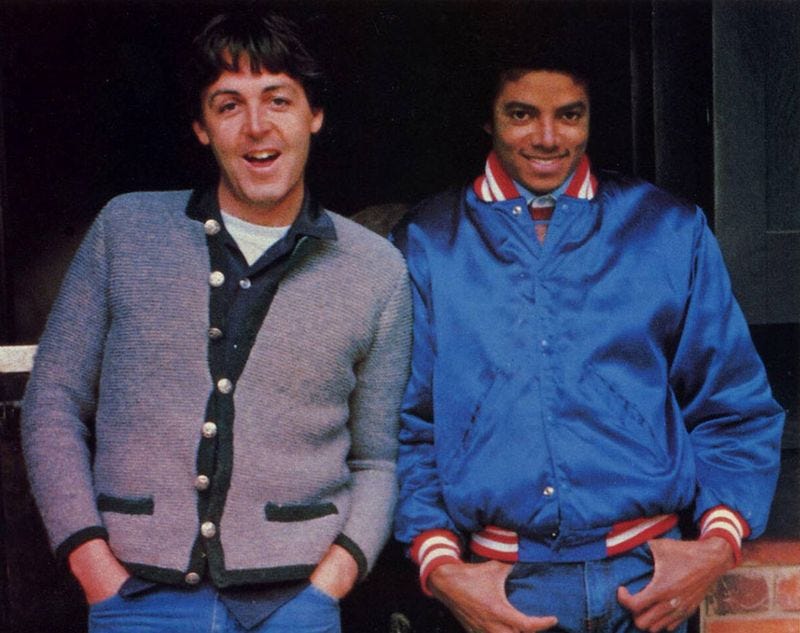
His personal catalog, the rights to his own recordings, remained contested and complicated in ways that cost him significantly in his final years. He died in June 2009, deeply in debt despite owning assets worth far more than what he owed. The estate has since resolved those complications and is valued at over one billion dollars. He never got to see that resolution.
The thread from Tharpe to Jackson is not metaphorical. It is documented, traceable, and direct. Each of these artists built on what came before. Each was managed, exploited, criminalized, sanitized, or sidelined by the structures around them. Each refused in their own way. And each handed something forward that the next generation picked up.
Now What Do You Do With This
This is not a complete accounting. It cannot be. Eight artists in one piece is already a compression of what deserves entire libraries. There are names not in this piece that belong here: Ma Rainey, who invented the form Billie Holiday perfected. Louis Armstrong, who was Cab Calloway’s predecessor and peer. Aretha Franklin, who fought for and won creative control in an era when it was not offered to Black women. Curtis Mayfield, who wrote for everyone else before he wrote for himself. There is more. There is always more.
But here is your assignment, because we do not leave class without one.
Look up the songwriter of your favorite song from any of these eras. Not the artist who performed it. The person who wrote it. Find out if they own the publishing rights. Find out what they were paid. Find out if they are in any hall of fame. Find out if they are still alive, and if not, what happened to their estate.
Look up the session musicians on one classic album from each decade between 1940 and 1990. Write down the names. Most of them you will not recognize. Ask yourself why.
Read about Harry Anslinger and what he built. Then read about how the structures he built were used after him. Then read about the congressional hearings on hip-hop in the 1990s. Then tell me the pattern is not the same.
Listen to “Strange Fruit,” “A Change Is Gonna Come,” and “Mississippi Goddam” in one sitting. All three. Back to back. Then sit quietly for a few minutes before you do anything else.
Black music is evidence. This month, we do not just celebrate it. We study it. We trace it. We name the people who made it. We ask who got paid. We ask who got erased. We ask who is still waiting for their name to be said correctly.
And then we say it.
Thank you for being here. You could be anywhere, and you chose to be here.